Cheeses of Auvergne
Five protected cheeses shaped by volcanic pasture
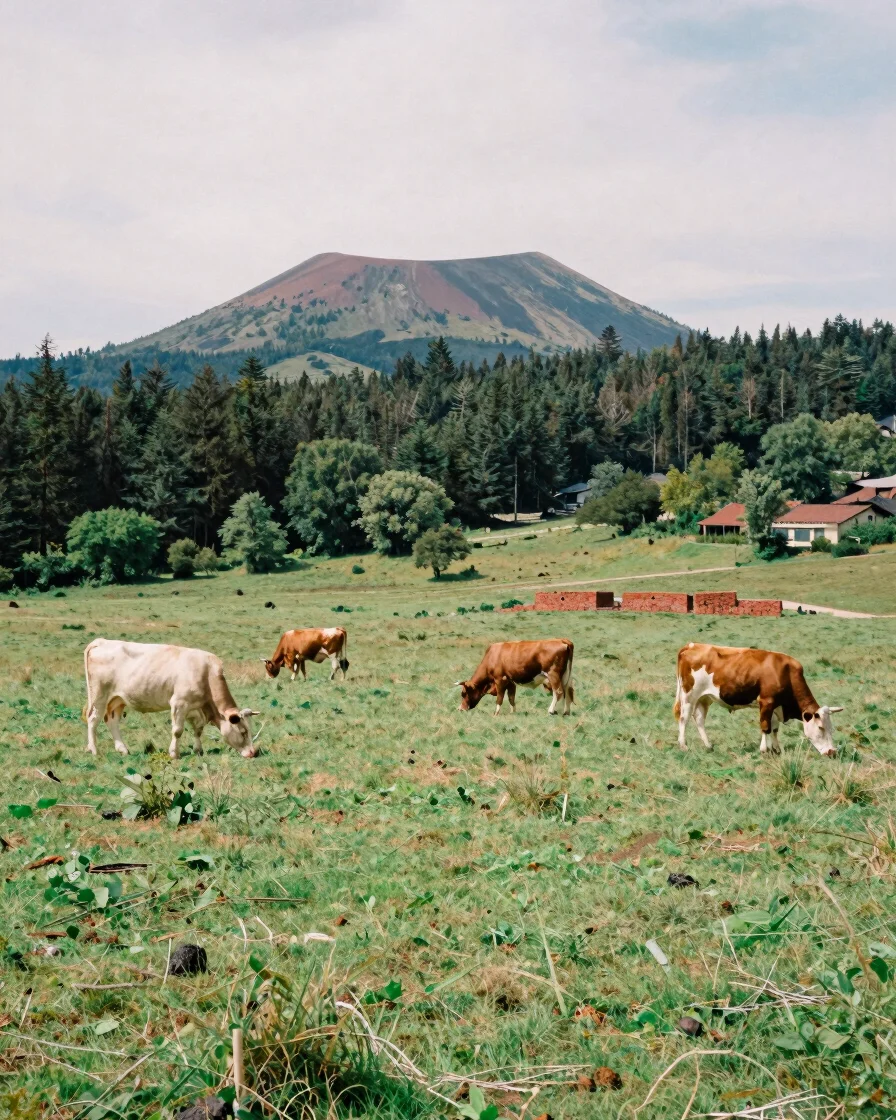
Cantal, Salers, Saint-Nectaire, Bleu d'Auvergne and Fourme d'Ambert each carry a protected designation tied to the grasslands and dairies of the region. Their character follows the pasture, the season, and the hands that tend the milk.
The five AOP cheeses
Texture, rind, and character
Cantal
A firm, pressed cheese with a long history
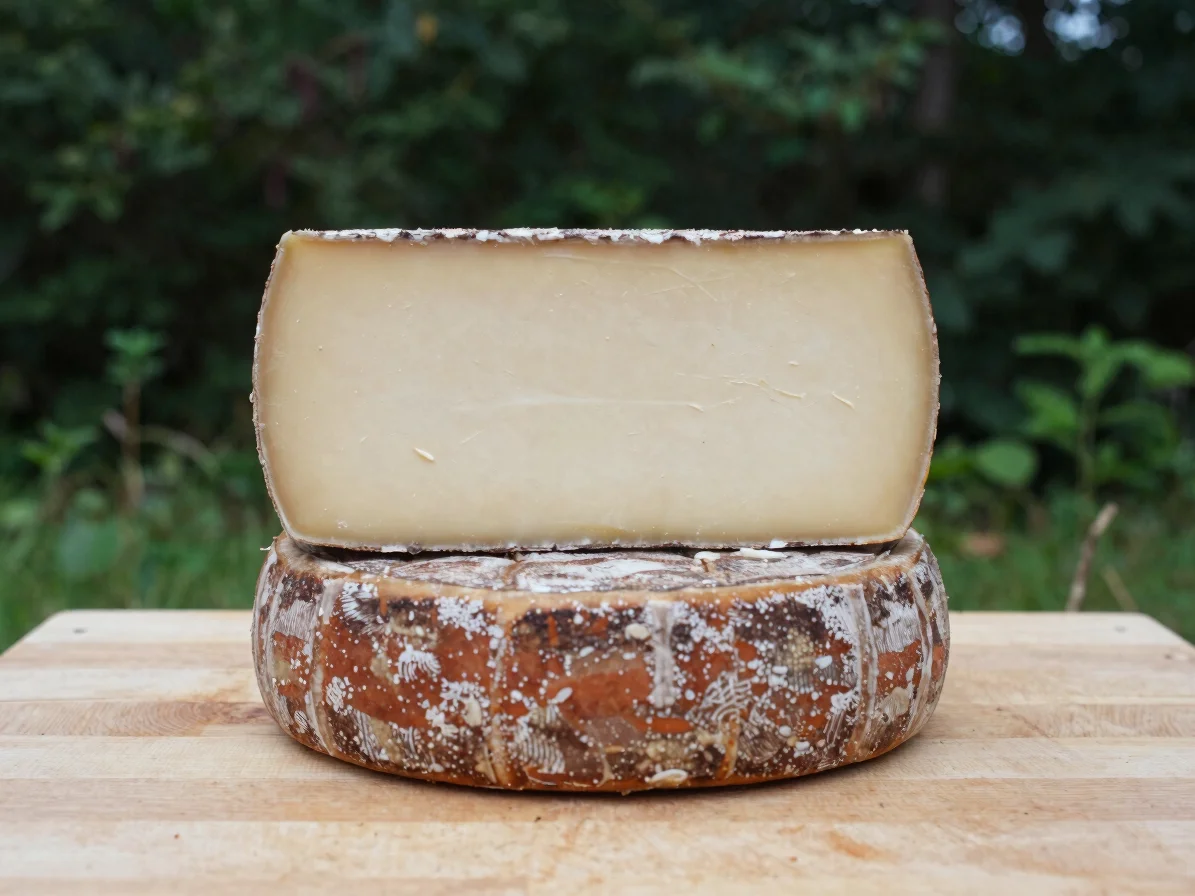
Cantal is a pressed cheese with a firm, closed paste and a rind that develops over the months of affinage. Its flavour tends to deepen with age, moving from milky notes toward a more rounded, savoury finish.
Salers
Pressed paste from the Salers breed
Salers is a pressed cheese made from the milk of the Salers cows that graze the high pastures. The paste is supple and the flavour reflects the grassland flora of each season.
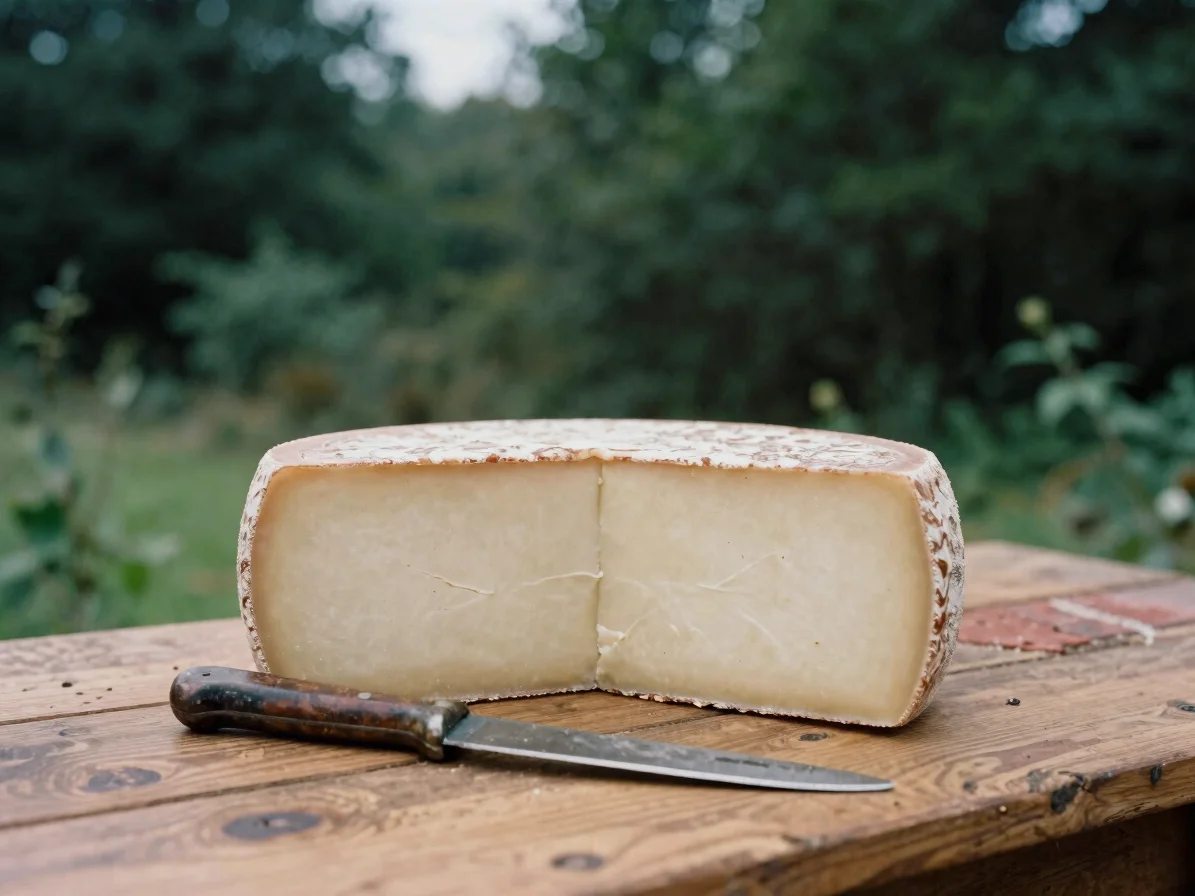

Saint-Nectaire
A soft cheese with a washed-style rind
Saint-Nectaire is a semi-soft cheese with a supple paste and a rind that is typically washed during affinage. Its texture is creamy beneath the surface, and its aroma changes as the cheese matures in traditional cellars.
Bleu d'Auvergne
Blue veining and a crumbly, creamy paste
Bleu d'Auvergne is a blue cheese whose veining develops through the careful piercing of the paste. Its texture ranges from crumbly to creamy depending on the age of the cheese.

Producers and affinage
Dairies, cellars, and patient ageing
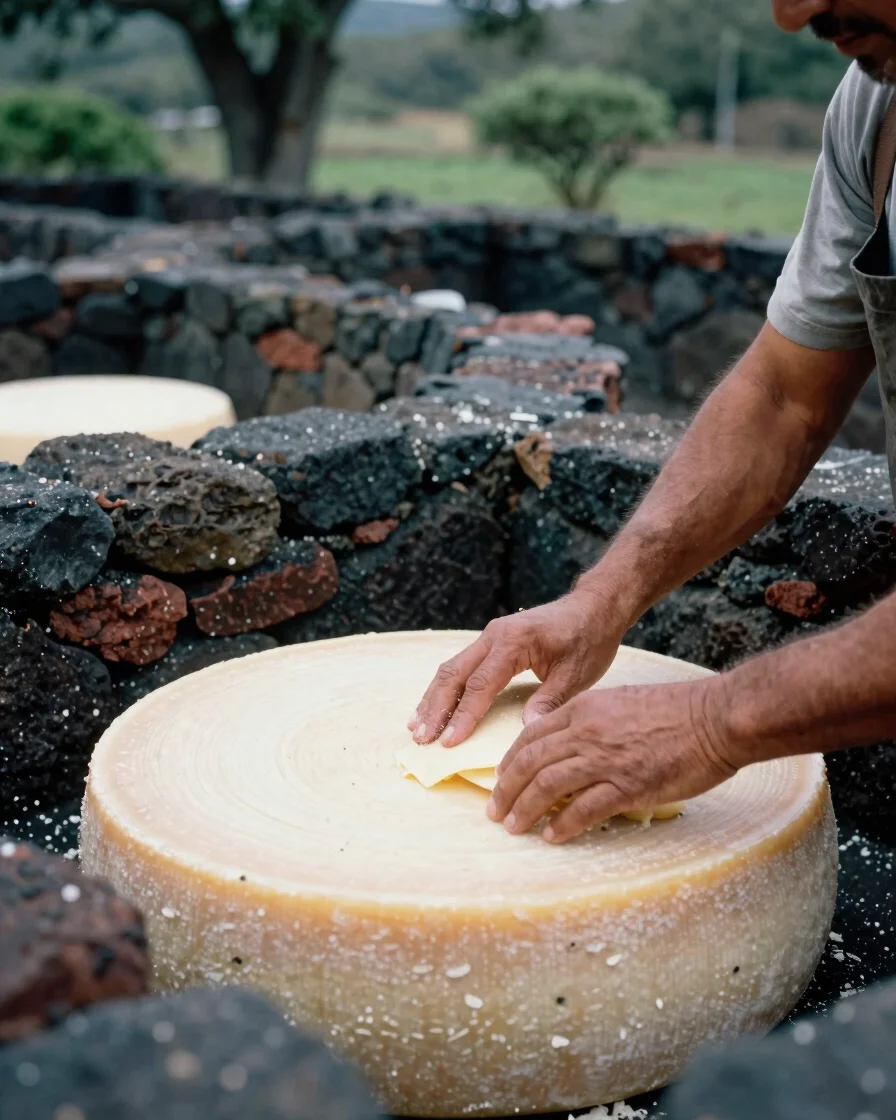
Across the region, family-run dairies and mountain farms shape each cheese through daily milking, seasonal grazing, and careful cellar work. Rind development and pressing methods differ from one producer to the next, and these differences are part of the regional story.
Affinage is a matter of time and attention: turning, brushing, and monitoring humidity as each cheese changes. The techniques described here are general observations, and readers are encouraged to consult the producers themselves for their specific practices.